In order to realize a sustainable society and leave a rich global environment to the next generation, we must not only promote the use of wood with a low environmental impact, but also properly preserve and manage it to realize a decarbonized society. We believe that this is important for the future. We will promote sustainable forest management, secure a stable source of CO2 absorption, and contribute to achieving carbon neutrality (*1).
- *1 The concept of subtracting the amount of absorption through afforestation, forest management, etc. from the amount of greenhouse gas emissions such as carbon dioxide, making the total essentially zero.
Absorption and fixation of CO2 by forests
CO2 absorption
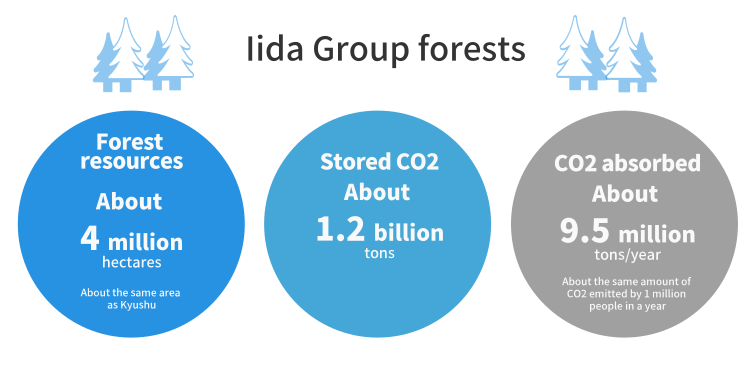
Our group owns approximately 4 million hectares of forest resources (approximately 1.08 times the size of Kyushu) in the Khabarovsk region of Russia's far east. This is one of the largest areas for a Japanese company with Overseas interests.
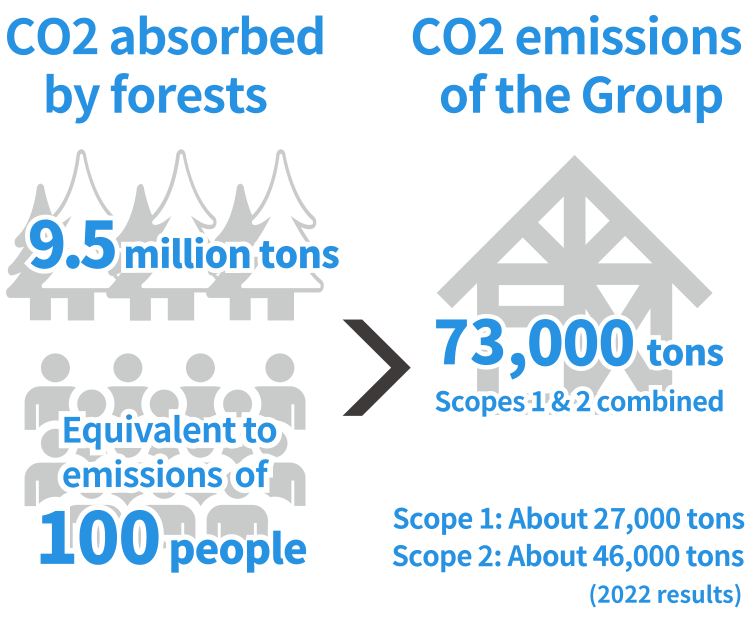
The amount of CO2 absorbed by this forest is estimated by a third-party organization to be approximately 9.5 million tons per year. Since Japan's CO2 emissions per person are approximately 9 tons (*1), this forest serves as a source of CO2 absorption for more than 1 million people.
Our group's Scope 1 and Scope 2 (*2) CO2 emissions are 73,000 tons per year (FY2022), so the amount absorbed by our forests far exceeds the emissions.
- *1 Calculated by the National Institute for Environmental Studies, National Research and Development Agency
- *2 Scope 1: Direct emissions of greenhouse gases by the company (fuel combustion, industrial processes)
Scope2: Indirect emissions associated with the use of electricity, heat, and steam supplied by other companies
CO2 fixation
It is estimated that a properly maintained 36- to 40-year-old cedar plantation can store approximately 302 tons of CO2 per hectare (*1).
If the 4 million hectares of forest that our group conserves is considered a cedar plantation, it would store approximately 1.2 billion tons (*2) of CO2.
- *1 Estimated by the Forestry Agency
- *2 Carbon storage amount is calculated based on in-house data

Forest conservation
The First Wood Group, which owns a wood processing factory, is engaged in activities aimed at protecting rich forest resources and preserving a sustainable forest environment.
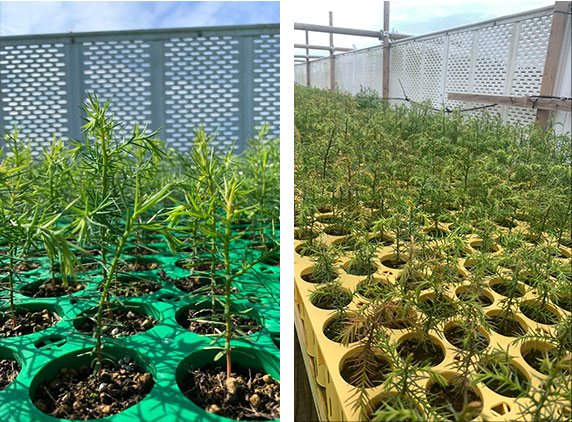
We have started producing cedar seedlings in cooperation with local cooperatives and others, aiming to reduce forest nursery costs.
Larch and cedar seedling production
Self-cutting forestry
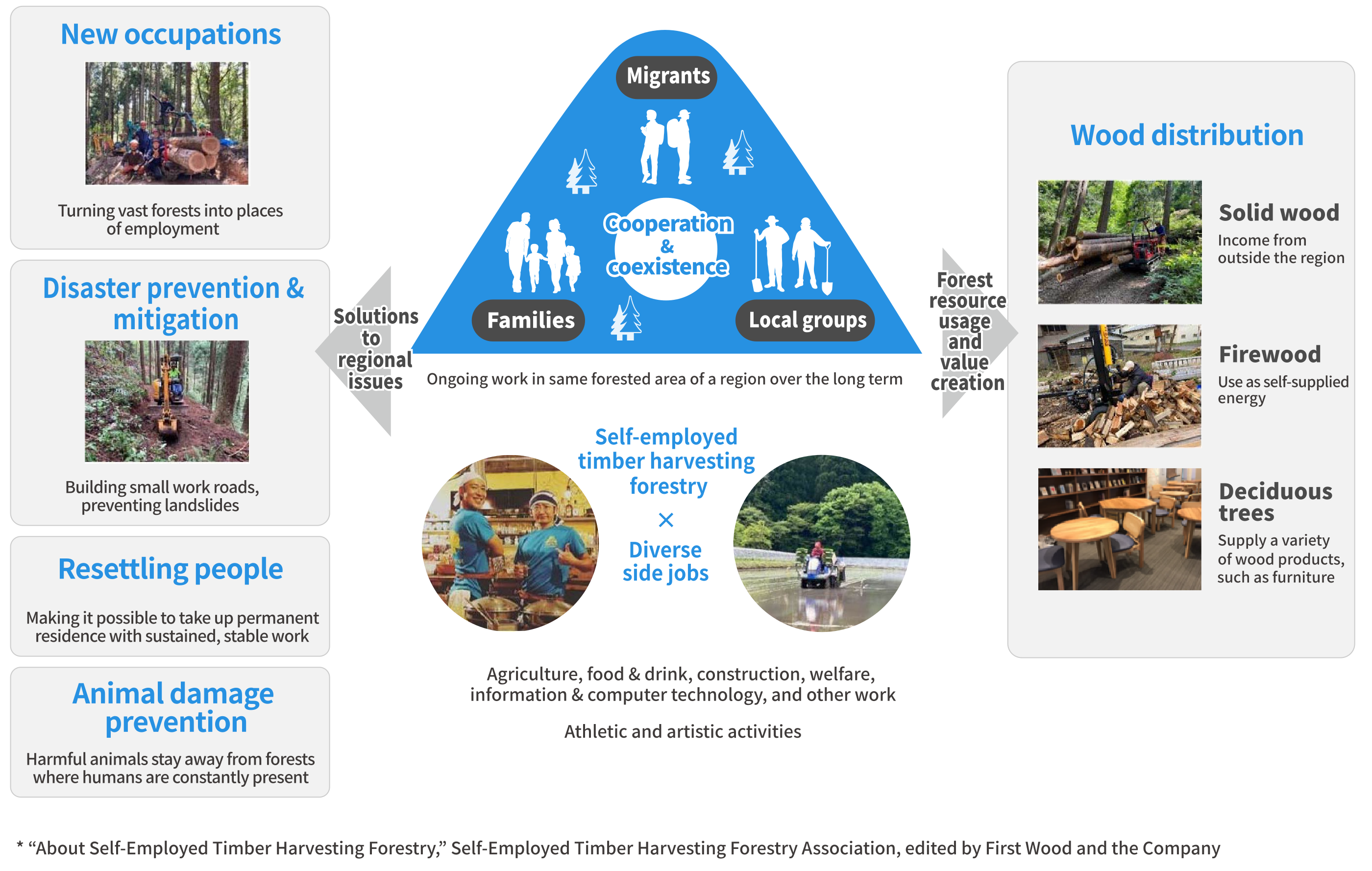
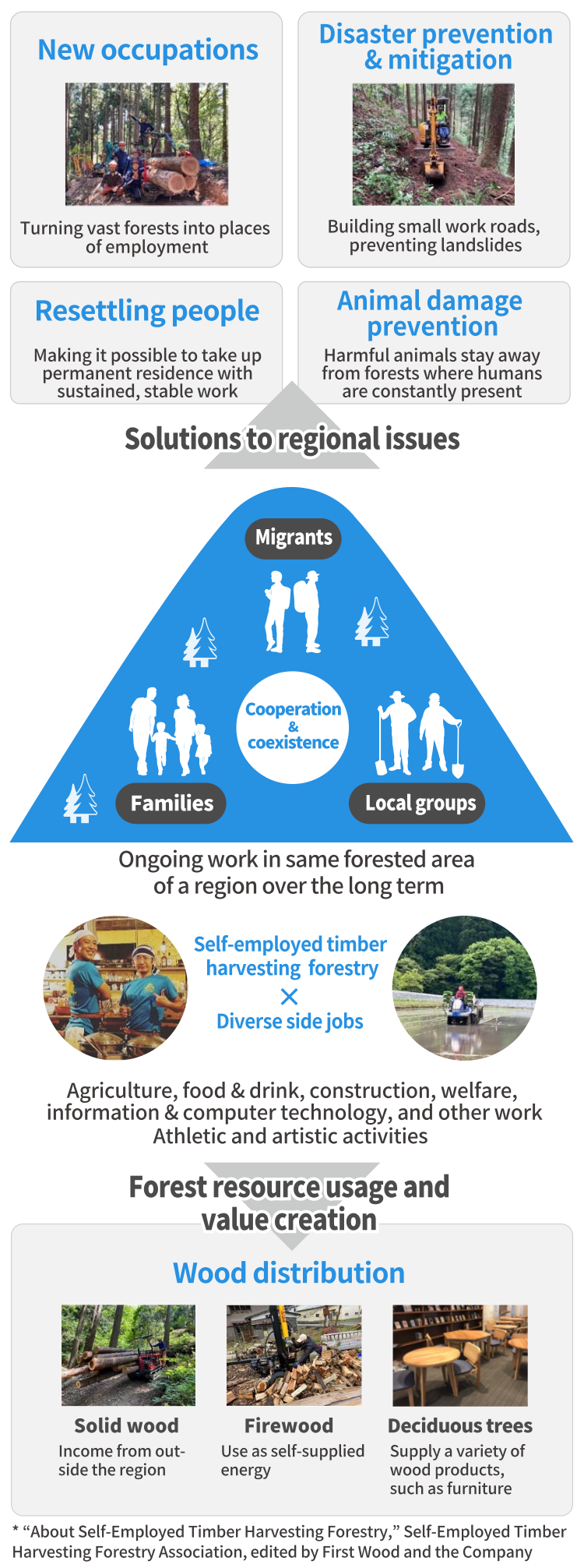
At Firstwood Group, we are working on a ''self-cutting forestry'' that achieves a high level of both profitability and environmental conservation. Self-cutting forestry is a type of forestry that is carried out jointly by business operators and mountain guardians, and involves long-term multiple thinning (*1) operations to stabilize management over the long term.
Stable employment will be created, it will serve as a migration/settlement policy, and various effects can be expected, including animal damage control, disaster prevention, and global warming countermeasures.
- *1 Thinning refers to cutting down some of the trees in a forest that have become too crowded as they grow.
Corporate forest business
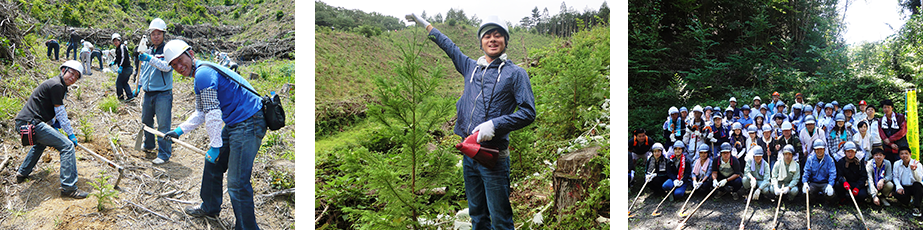
As part of our CSR activities, Toei Housing Co., Ltd. is the first wooden housing provider to participate in the "Corporate Forest" project promoted by the Tokyo Metropolitan Government and the Tokyo Agriculture, Forestry and Fisheries Foundation. I am. We hope to become a company that can contribute to society by having each and every employee engage in environmental protection activities.Also, by allowing employees to actually experience forest creation, they can experience the years and hardships it takes for a sapling to grow into a tree. We are working to develop employees who can handle materials with care.
- *What is “Corporate Forest”?
This is a project that promotes "creating forests with low pollen'' with the support of companies. We aim to reduce the amount of cedar pollen generated in the Tama area by cutting down artificial forests such as cedar and cypress in the Tama area and planting cedar and other trees that produce less pollen.

